Learn Cantonese with AI Through Real Conversations
Cantonese is learned through listening, speaking and responding in real situations. Knowing individual words is helpful, but everyday communication also requires you to recognize natural expressions, follow the flow of a conversation and answer without translating every sentence in your head.
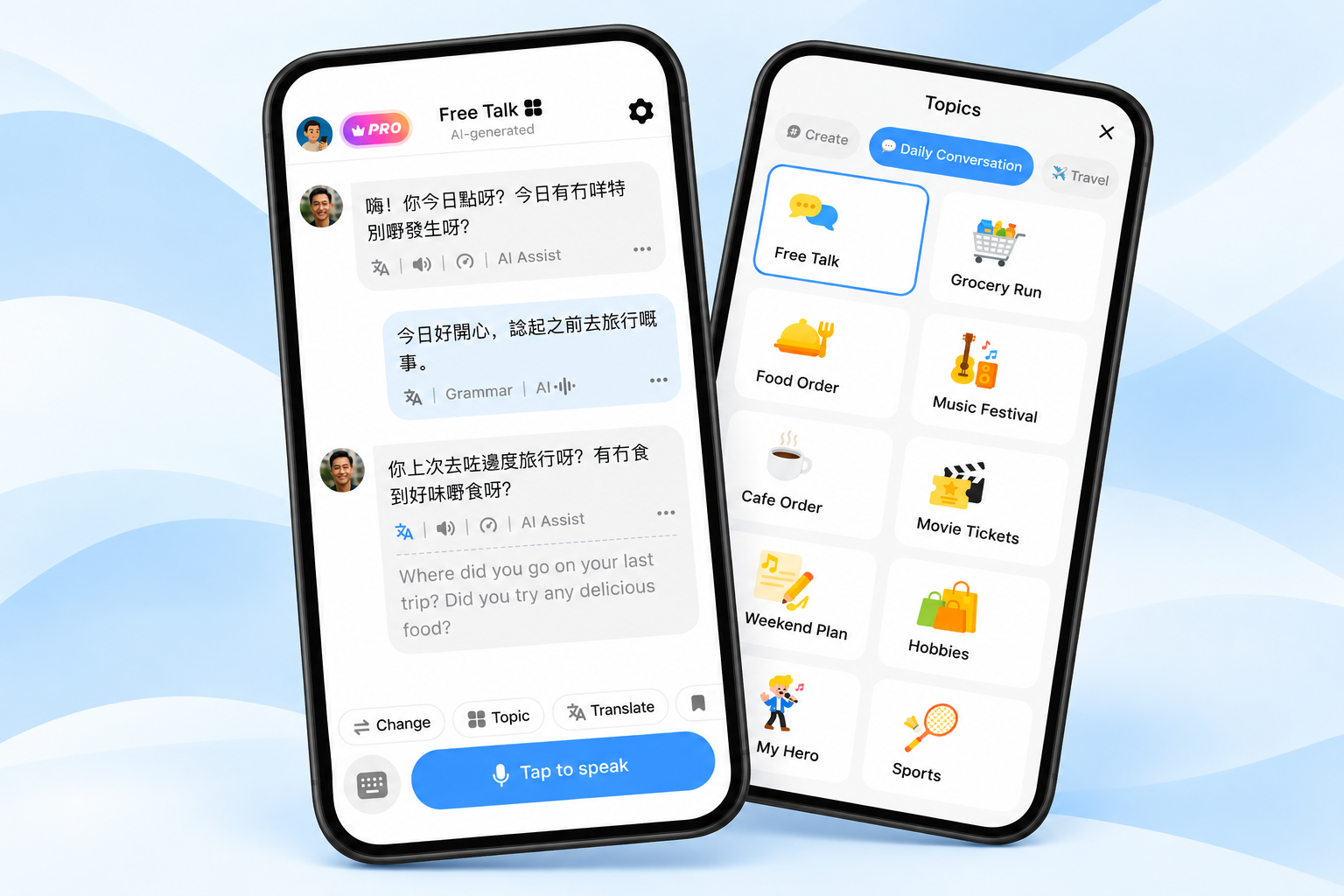
Cantonese Ai gives you a private space to practise these skills with an AI tutor. You can choose topics that match your interests, speak about everyday situations, review corrections and repeat a conversation until your response feels more natural.
Why conversational practice matters in Cantonese
Spoken Cantonese often differs from the language learners encounter in formal written materials. A sentence may be grammatically understandable but still sound too formal for an everyday conversation. Interactive practice helps you become familiar with the way ideas are expressed in spoken Cantonese.
- introducing yourself;
- ordering food or shopping;
- discussing work and daily routines;
- asking for directions;
- talking about travel and hobbies;
- explaining a problem or requesting help.
How AI supports Cantonese learning
AI practice gives you more opportunities to produce Cantonese actively. Cantonese Ai provides tools including message translation, corrections, saved expressions and pronunciation feedback. If a response is difficult, you can review it and try again without waiting for another person.
A practical Cantonese learning routine
- Choose one familiar conversation topic.
- Listen to or read the opening prompt.
- Answer aloud in Cantonese.
- Review any correction or pronunciation feedback.
- Repeat the answer using a clearer or more natural expression.
- Save useful phrases and reuse them in another conversation.
Who can use Cantonese Ai?
Cantonese Ai can support beginners who want a private place to start speaking and independent learners who need more practice between classes or conversations. It can also help people learning Cantonese for family communication, travel, work, friendships or a connection with Cantonese-speaking culture.
AI practice can complement teachers, courses and language exchange apps like HelloTalk by giving you more opportunities to prepare and repeat what you want to say.
Questions about learning Cantonese with AI
Can a beginner learn Cantonese with AI?
Yes. Beginners can start with greetings, introductions and short answers about familiar topics.
Can AI help with Cantonese pronunciation?
Pronunciation feedback can help you notice parts of your speech that need more practice. Listening carefully and repeating short sentences is especially useful when working on Cantonese sounds and tones.
Does AI replace a Cantonese teacher?
AI provides additional practice and repetition. A teacher can offer structured guidance, cultural explanations and detailed help with difficult language points.
Should I learn written Chinese before speaking Cantonese?
You can begin speaking Cantonese without mastering written Chinese first. The right balance depends on whether your main goal is conversation, reading, work or formal study.